

Beyond "Right" or "Wrong": Reframing the Action in the Market
The Trade is a Bet, Not an Answer: Dump the Crystal Ball.

Ditch the Binary Lie: Stop judging a trade as “right” or “wrong” based solely on profit or loss, as a reckless win is a bad decision with a lucky outcome, while a planned loss is a good decision that paid the cost of the edge.
Embrace the Poker Mindset: The market is not deterministic chess. It’s probabilistic poker, requiring you to manage risk with incomplete information and accept that random events will inevitably annihilate sound trades.
Kill “Resulting” Before It Kills Your Edge: You must avoid the cognitive trap of resulting—judging a long-term strategy by short-term outcomes—to ensure your disciplined, high-quality process is allowed to deliver its statistical edge over time.
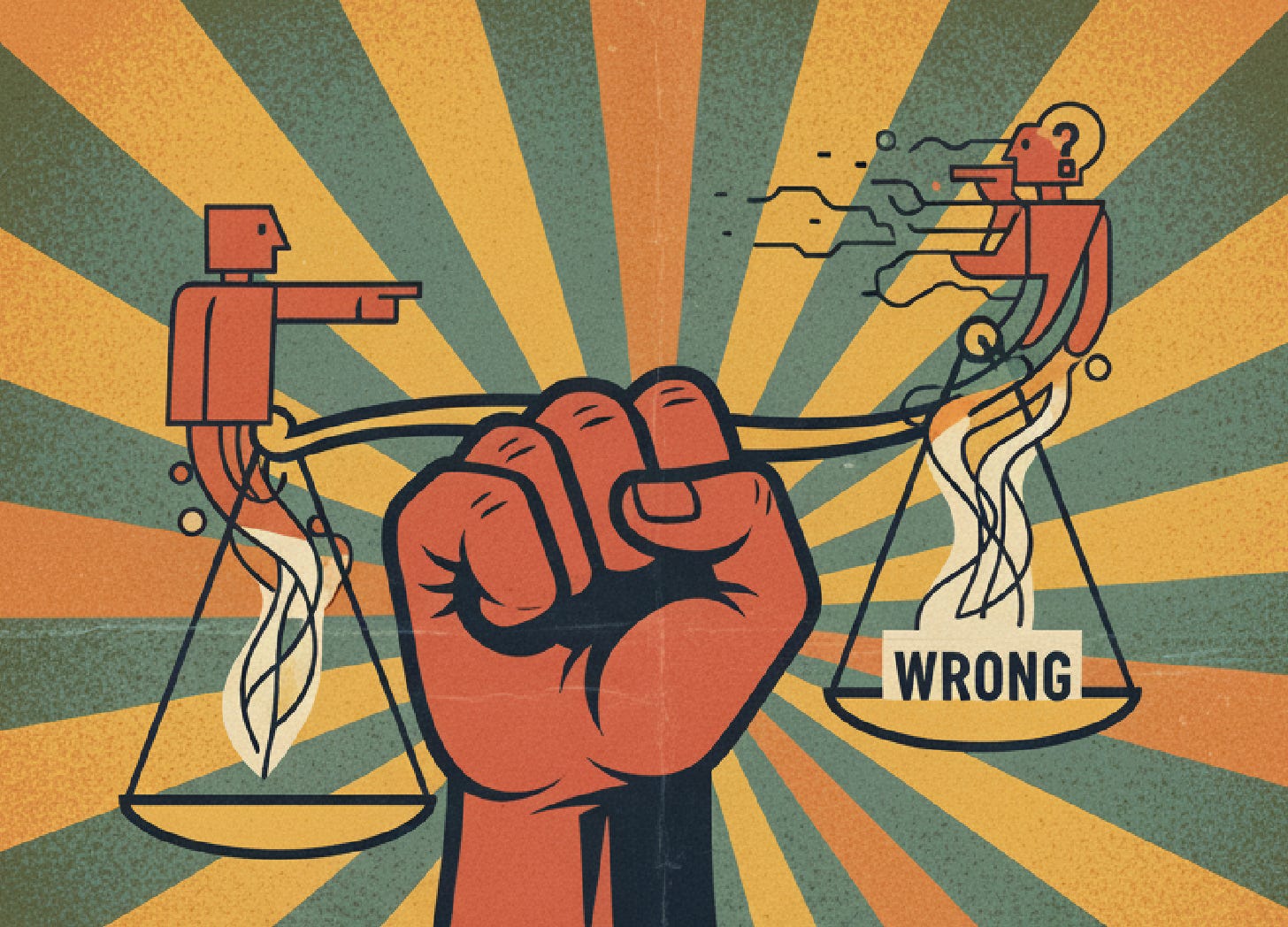
Look, the fundamental shift you need to survive this business is shedding the adolescent notion of a binary outcome. Forget the clean narrative of “right” or “wrong.” That stuff is a myth, a distraction for amateurs. Every decision you make with options is a bet on a potential future, and you have to understand that the quality of the decision stands alone, completely separate from the eventual outcome. You’re trying to find a solid process that makes sense over time, not a crystal ball.
1. The Flaw of Binary Assessment
The core mistake that sinks most traders is the binary assessment: grading a trade simply on whether it put money in the account. This myopic focus on profit or loss blinds you to the sloppiness of the actual work.
Take some fool who leverages up irrationally, unhedged, and gets lucky on some freak market spasm. He wins big. The outcome is positive, sure, but his decision quality was trash. Nothing more than a ticking clock of inevitable ruin. Conversely, a disciplined veteran runs a calculated, risk-defined position based on solid research, and some unpredictable headline drops the whole thing into the red. Negative outcome, but a high-quality decision.
You have to tear down that mental wall. The market is statistical, a probability engine, not some perfectly geared machine. Judging a move by the result, instead of the process, is pure self-sabotage. If a reckless win reinforces a bad habit, you’re dead. If a random loss makes you dump a winning strategy, you’re done. Consistency comes from assessing the entry, sizing, and risk management before you execute, not the closing price. That foundational shift from isolated results to cold, hard process evaluation is the cornerstone of survival.
2. Decision Quality vs. Trade Outcome
Here’s the mature philosophy: Every time you hit the order button, you’re placing a bet on a probabilistic scenario. This isn’t arithmetic. This isn’t 2+2=4. This is wagering, plain and simple, and you have to internalize that your decision process is entirely independent of the immediate trade outcome.
A “good process” is defined by methodical work, respecting your risk parameters and enforcing strict emotional discipline on sizing. You do that, you’ve made a quality decision. If that decision loses because of a complete outlier event, the decision was still sound; the loss was just the cover charge for doing business in a random arena. But if you gamble by chasing a spike with leverage you can’t afford and you get lucky, that’s a terrible process yielding a bad result no matter how much money you made. The market just handed you a grenade with the pin pulled. You focus on the quality of the process. The outcome is what happens when you let go.
3. The Poker vs. Chess Analogy
If you think this game is like chess, let me stop you right there, partner. Chess is a closed system. All pieces are known, all rules are fixed. The optimal move is always there.
The options market is a grinder, a street fight more akin to poker. This is a probabilistic, dirty environment built on hidden information, skill, and luck…of course. You don’t know the other guy’s cards, their internal algorithms, their order of operations, their proprietary insights. And just when you think your 90% chance of winning is all but a sure thing, the dealer or the market will always toss in an unpredictable river card or flash crash or a central bank surprise that annihilates the smartest play.
You learn to weigh probabilities and manage risk with a hand you can’t fully see. A sharp poker player takes a statistical edge and still loses a hand, but over a thousand hands, he takes the house. Likewise, the successful options trader accepts that some great bets will lose and some boneheaded moves will win. Successful option traders stop trying to nail the single, certain future (chess) and start making the best possible bet against a distribution of likely, messy outcomes (poker).
4. Understanding “Resulting” in Trading
This is the mind game that separates the pros from the crowd: “Resulting.” It’s the poisonous habit of judging the quality of your strategy based only on the most recent, short-term results. Annie Duke coined the term in her fantastic book Thinking in Bets. She surmised that amateurs see a profitable trade and think the strategy is genius and regards the strategy as broken when hitting an unforeseen snag.
This bias is a killer. Say you’re running a strategy with a statistically sound positive expectancy and it’s designed to win 55% of the time over the long haul. But the market delivers four straight, ugly losses. The resulting trader panics. He concludes the whole plan is flawed and immediately shifts gears. He’s reacting to a random, temporary sequence instead of trusting the math. This is why YouTubers spouting the “New Strategy to Make You Millions” are so popular. They target self doubt, fear of missing out (FOMO), and desire to make easy money.
Resulting ignores that this is a game of statistical variance. You beat it by creating a self-audit trail for your process (e.g., checklist, spreadsheets, etc.). Constantly evaluating decision and execution quality.
Did you select a duration that avoids key economic reports?
Did you enter at the correct point?
Was your sizing too big or too small?
You separate the integrity of the execution from the fleeting, chaotic noise of the result.
5. The Trap of Abandoning Sound Strategies
Resulting is more than a mild flaw and can destroy your long-term edge like a deadly pathogen. When you assess a strategy based on a small, emotional cluster of losses, your analysis is purely irrational. A proven strategy, like consistently selling premium, relies on the compounding power of the Theta (θ) edge over hundreds of trades. It builds in the expectation of occasional losses.
But after a few random punches, the junior trader is paralyzed by fear and throws in the towel. They declare the strategy “flawed” and rush off to chase some untested, unproven methodology that happened to win last week. This constant “strategy shifting” guarantees one thing: you never stay long enough in any single system for its statistical advantage to overcome the inevitable losing streaks. Most green retail traders never make it out of this vicious cycle and chalk it up to being unlucky.
By reacting to the market’s noise instead of upholding the plan, you’re constantly hitting the reset button on your performance. You capture the negative side of your original strategy’s variance (the losses) but skip out before you can bank the positive side (the wins). This behavioral sickness undermines everything, replacing a known, profitable edge with chaos.
6. Process Over Prediction: The Path to Success
Here is the final word…
Long-term success isn’t about calling the market right. That’s impossible anyway. It’s about moving past prediction and mastering the process. Success is achieved by maintaining a disciplined, great decision-making framework no matter how ugly the short-term results get.
A great decision is the result of a good process. That process has quantifiable rules: rigid analysis of volatility, calculating risk-to-reward like a machine, and absolute adherence to position sizing rules. But it also demands the non-quantifiable emotional backbone, patience, and the commitment to execute the plan even when the last few trades have been a punch to the gut.
Final Note
Prioritizing the process is your defense against resulting. When a trade dies, you don’t panic. You review the work. Did you follow the rules? Was the analysis sound? If yes, the loss is merely the cost of capturing the edge. Nothing more than a random piece of friction that doesn’t invalidate the whole war plan. You measure success not by the size of the last winning trade, but by the consistent, cold-blooded application of a high-quality methodology that, over the course of a career, is guaranteed to let that inherent statistical edge deliver the returns.
References
Duke, Annie - Thinking in Bets: Making Smarter Decisions When You Don’t Have All the Facts Buy this book now!